
 Time : Aug.12, 2026
 Author : An Ni
 Print
Print
From July 20 to 26, 2026, a delegation of China-Africa Institute (CAI), led by Professor Tian Feng, Vice President of the CAI, visited South Africa and Zimbabwe for academic exchange. The exchange aims to facilitate the establishment of China-Africa Research Center in South Africa, to promote the exchanges on governance experiences between China and Africa, and long-term cooperation between Chinese and African universities, think tanks and institutions.
On July 21, the delegation visited the University of Johannesburg (UJ) and held meetings with representatives of the UJ and the National School of Government of South Africa (NSG). The exchange focused on the work arrangement following the launch of China-Africa Research Center in South Africa. Representatives of the UJ briefed on its research strengths in sustainable development, digital transformation, social inequality, public policy and other areas.
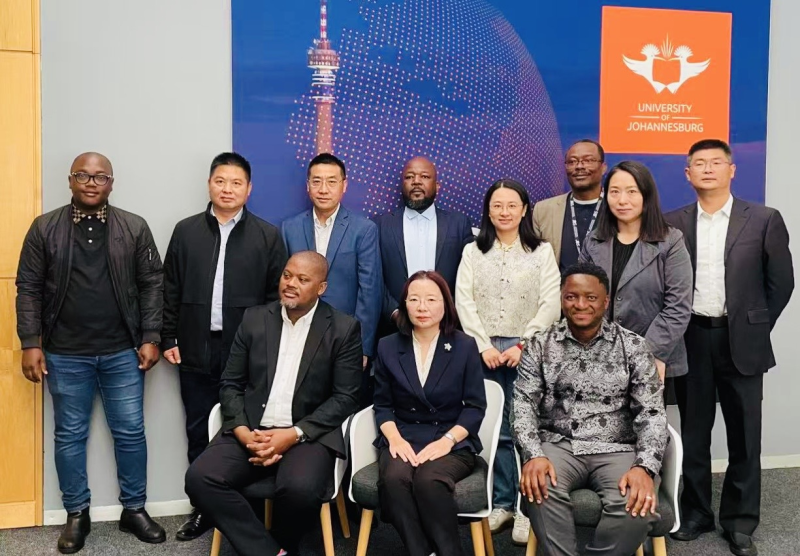
CAI delegation and representatives of the UJ
The delegation also paid a visit to the Chinese Embassy in South Africa and held meetings with heads of the Political Section and Cultural Section. The two sides had in-depth discussions covering the political and social landscape of South Africa, China-South Africa economic and trade ties, and other topics.
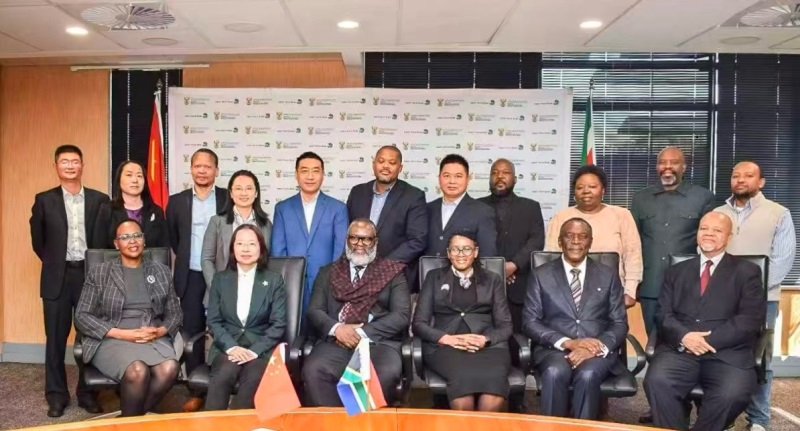
CAI delegation and representatives of the NSG
On July 22, the CAI delegation and the NSG jointly hosted the 24th China Lecture and the launch ceremony for the establishment of China-Africa Research Center. The lecture themed “New Situations, New Opportunities and New Pathways for China-Africa Cooperation and Development during the 15th Five-Year Plan Period” was followed by a seminar “Modernization of Governance in China and Africa”.
Inkosi Mzamo Buthelezi, Minister of Public Service and Administration of South Africa, noted in his address that the establishment of the China-Africa Research Center represents a tangible outcome of the 2024 FOCAC Beijing Summit, marking a key step forward for South AfricaChina collaboration in knowledge-sharing and governance innovation. He said, faced with multiple challenges such as global economic volatility, technological transformation and climate change, unilateral approaches are no longer viable, and transnational and interdisciplinary collaboration become indispensable.
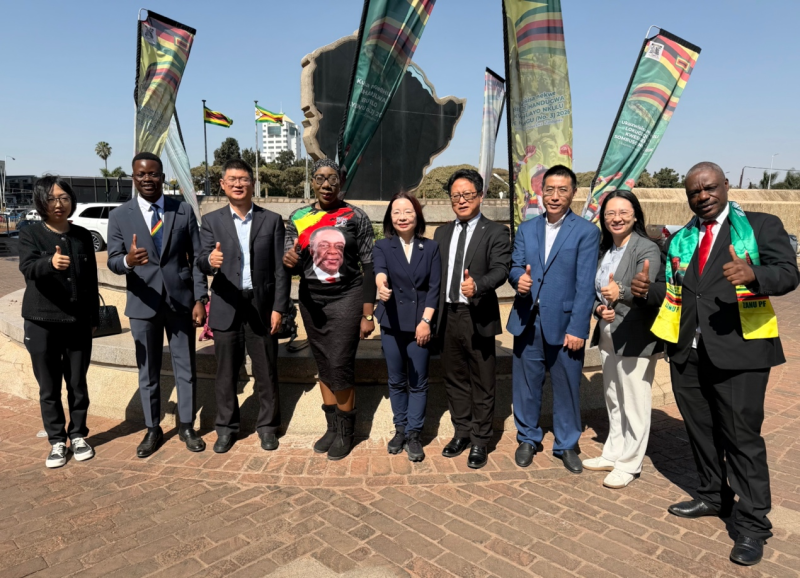
Group photo with representatives of ZANU-PF
On July 24, the delegation visited the headquarters of the Zimbabwe African National Union-Patriotic Front (ZANU-PF), the ruling party of Zimbabwe, and held talks with heads of the party’s education departments and representatives from other institutions.
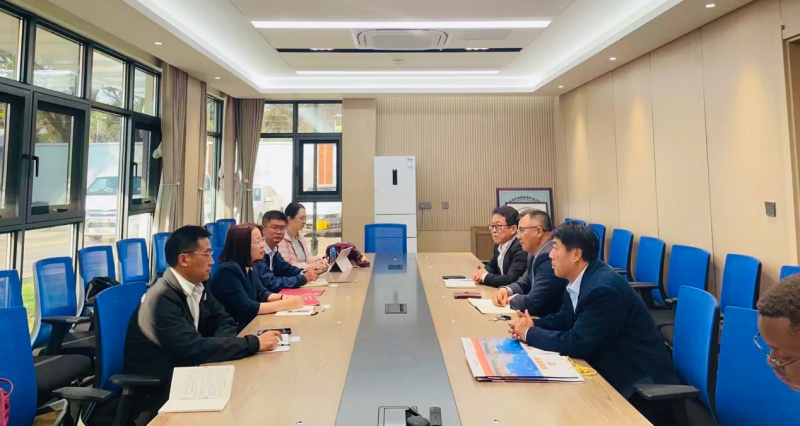
CAI delegation has meeting with representatives of Chinese-funded enterprises in Zimbabwe
The delegation also met with representatives of Chinese-funded enterprises, chambers of commerce, as well as new-energy and mining enterprises in Zimbabwe. It learned about local mining policies, the business environment and difficulties faced by Chinese-funded enterprises in Zimbabwe.
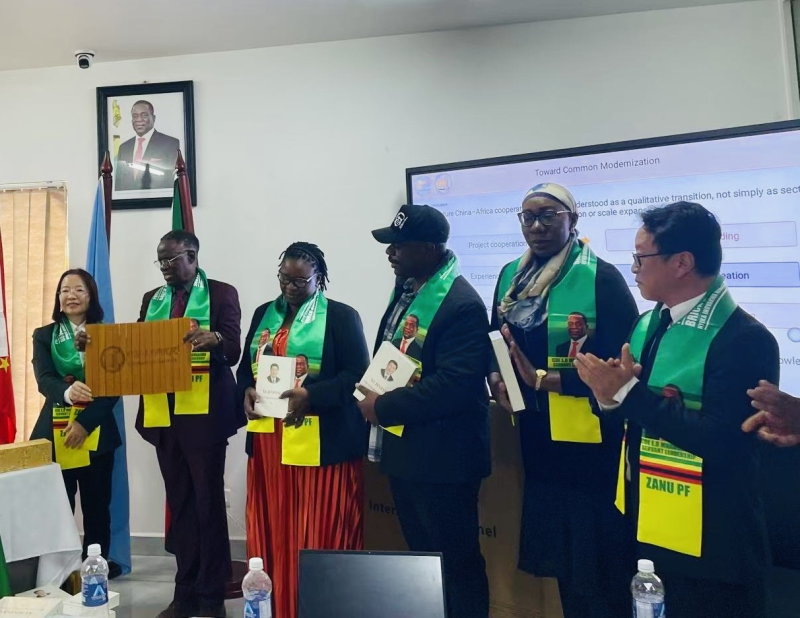
Scene of the 24th China Lecture in Zimbabwe
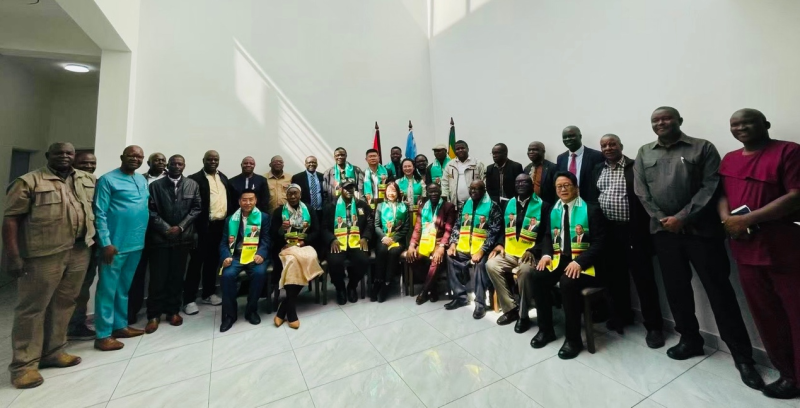
Group photo
On July 25, the delegation hosted the 24th China Lecture at the ZANUPF party school - Chitepo School of Ideology. The lecture was attended by Anastancia Ndhlovu, Director of the ZANU-PF Economic Affairs and also former Deputy Minister of Tourism of Zimbabwe; Gideon Chiukira, Director of the ZANU-PF Department of Education, Ideology and Research.
The two sides held discussions on “Strengthening Intellectual and people-to-people exchanges for common development”. Chinese scholars delivered speeches on new opportunities for China-Africa economic and trade cooperation during the 15th Five-Year Plan period, China’s role in Africa’s industrialization drive, and new pathways for China-Africa joint pursuit of modernization.
 China-Africa Institute
Forum on China-Africa Cooperation
China-Africa Institute
Forum on China-Africa Cooperation
Address : 27 Wangfujing Street, Dongcheng District, Beijing Post Code : 100710 Tel. : 010-65395110
 China-Africa Institute
 Journal of China- Africa Studies
 West Asia and Africa
